
The piano has always held and continues to hold an integral part in the musical world. The stand that supports the instrument has undergone the same evolution throughout time. The piano stand history showcases how technological advancements and artistic conception have shaped music. What began as intricate frames in the 19th century later turned into sleek and adjustable designs that encompass the world of craftsmanship and innovation.
To know more, Read: 5 Core, Yamaha vs. K&M Piano Stands in 2025: Which One Should You Choose?
Craftsmanship With Acoustic Pianos: The Foundation of Structure

Early Concepts Combined With Function:
During the years 1800 and 1900, a piano’s stand was never detached from the device. Grand and upright pianos were designed with wooden frames to lift the weight of the cast iron harps along with thick soundboards. These old vintage stands made sure the piano still remained a centerpiece through timeless parlor rooms. All pianos, concert halls, as well as churches, were housed permanently, so the vintage piano stands placed mobility on the backburner.
Their ornate carvings alongside polished finishes mirrored the decorative styles of that era. But as always, features came before everything else. These structures, still minimal, were constructed to reduce trembles to preserve the resonance of the instrument in parts.
Portable Stands for Acoustics Rise to Popularity:
Toward the end of the 19th century, smaller pianos, such as square and spinet pianos, became increasingly popular. These instruments required lighter, collapsible stands for household use. Wooden folding trestles and X-frames were designed, offering higher aesthetic value to home furnishings, though still modestly portable. Regardless, their versatility was severely lacking, designed only for the limited mobility of the time.
Digital Starts to Take Over: Shift in Focus

Invention of Electronic Keyboards:
The mid-20th century marked another shift in musical instrument designs with electronic keyboards such as Fender Rhodes and Hammond organs. These instruments required portable stands due to frequent traveling and variant arrangements on stage. Early solutions like simplistic x frame stands worked but provided insufficient versatility. Despite these designs being groundbreaking for their time, the increasing gap between acoustic and digital stands in regard to portability and ease of use highlighted a problem.
Adjustability Innovation:
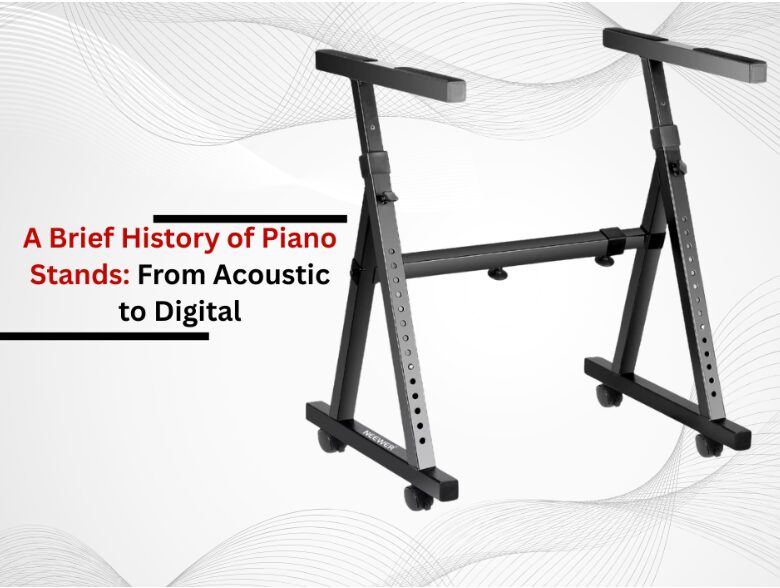
By the 1980s, synthesizers and workstations were at the center of music production. Musicians frequently utilized multiple keyboards, requiring stands that could accommodate several tiers and differing heights. Z-shaped stands with adjustable arms became standard, offering configurational flexibility. Sturdier materials like steel and aluminum began replacing bulkier materials, which decreased weight without sacrificing structural integrity. Vintage piano stands, like all other parts of the furniture industry, were rooted in historically static designs. This era marked the vintage piano stands’ enduring place amidst their modern counterparts, which embraced modularity.
Piano Stands: The Modern Synthesis of Utility and Decor

Acoustic Stands in the Age of Technology:
It may come as a surprise, but the digital boom did not kill acoustic piano stands. They, instead, transformed to meet contemporary needs. Modern acoustic stands feature hybrids of wrought wooden finishes with metal legs, like mid-century wood burners, that appeal to classical aesthetics while maintaining structural integrity. Manufacturers who cater to classical pianists often focus on the production side, ensuring that their stands serve as a functional piece as well as beautiful decor designed to complement the instrument.
Digital Stands: Versatility Redefined
Today’s argument of acoustic vs. digital stands revolves around flexibility. For digital stands, practicality takes precedence. Features such as height adjustability, foldability, and compatibility with mixers and laptops are emphasized. Dominating the industry are materials such as carbon fiber and aluminum alloys, as they are lightweight and strong. Ergonomics is now a focus as well, with tilting and tiered designs that help mitigate repetitive strain injuries during bodily movements.
Nostalgia of Vintage Aesthetics:
The irony is that in recent years there has been a resurgence in demand for vintage piano stands. Reproductions of 19th-century designs, which are often made out of modern materials, have a niche in the music and interior design industries. These stands are functional supports, but more importantly, they serve as decorative pieces.
The Future of Piano Stands: Uncharted Horizons
The evolution of hybrid instruments and digital pianos will surely alter their supports. Motorized height adjustment and integrated cable concealment are ideas currently being tested. AI personalization that tailors the supports to the user’s body also crosses many manufacturers minds. Looking towards the future, using recycled metals and biodegradable composites is also increasingly becoming popular. Despite all this, the primary problem is still the same: balancing the timeless needs of acoustic pianos with the evolving needs of digital technology. The stand must function as an invisible yet crucial adjunct to the instrument, whether it is a grand piano housed in a concert hall or a portable synthesizer in a bedroom studio.
Conclusion
The history of piano stands is one of quiet adaptation. It is a narrative of musical tradition meeting technological development. From the ornate stability of vintage piano stands to modular modern designs, these supports have, over time, evolved as silent partners to the instruments they uphold. Through this evolution, certain brands have become a part of this story, such as 5 Core, Roland, K&M, and On Stage, which are frequently mentioned when discussing acoustic vs. digital stands or the return of nostalgic designs. Even if their contributions were different, they all highlight the unity of needs across time, styles, and genres.
The unwritten future of making music solidifies the unclear future of piano stands at the same time. Their form will continue being shaped by new materials, technologies, and artistic philosophies. But whether these structures support a vintage piano stand or a sleek digital workstation, their legacy as a connection between craftsmanship and innovation will remain.