
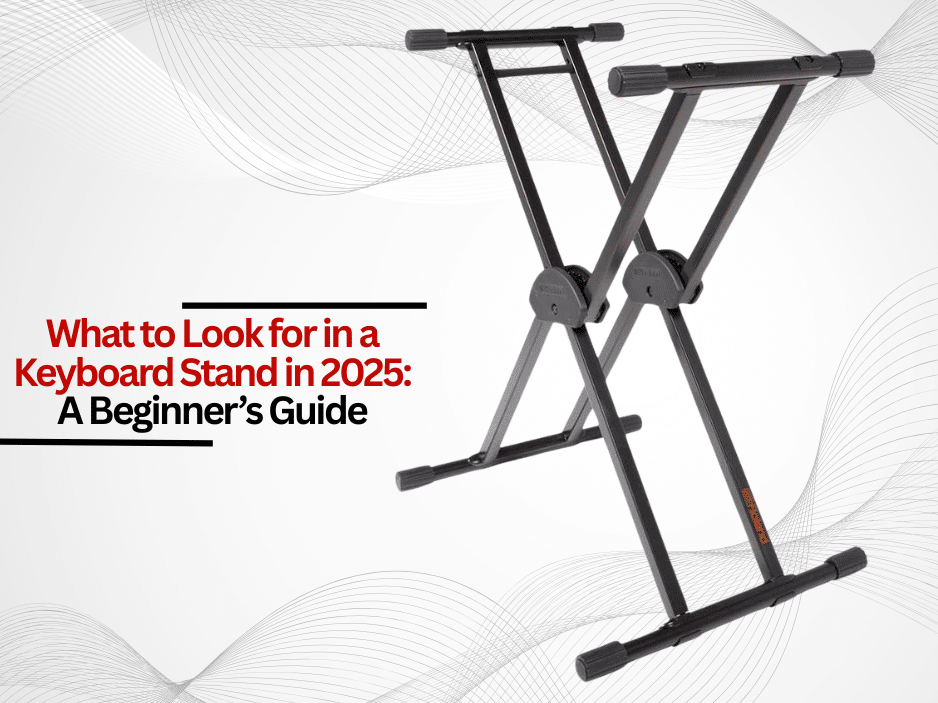
In 2025, the vast array of styles, materials, and features available for a keyboard stand can be overwhelming for first-time users. The focus is almost always on the instrument, but the keyboard stand is just as critical, if not more, in guaranteeing comfort, posture, and performance. This guide compiles the most important factors for beginners to make sure they’re covered on how to keep up with the market while considering practicality and future scope.
To know more, read: The Evolution of Piano Stands: From Fixed Frames to 2025’s Adjustable Solutions
Beginners Features Under Essential

Adjustability:
The basic definition of stand adjustment flexibility is the ability of a keyboard stand to ergonomically conform to the player’s height and posture. The primary place of action should be at seated, standing or center positions through either powered or manual vertical scaling. Furthermore, the fixed angle of five to ten degrees tilt from horizontal that is common for piano keyboards should be incorporated to quiet the wrist lifters during practicing.
Stability:
Stability looks particularly at construction to mitigate any wobbling that may occur during active play. Best are lightweight keyboards that can withstand over a hundred pounds. For added stiffness, cross-braced legs and rubber feet, as well as reinforced steel or aluminum alloys, are preferred.
Portability vs. Permanence:
Beginners should think about their sets of activities. For ease of movement, they would prefer an ergonomic stand weighing less than 12 lbs. Fixed hardwood or steel stands are better for home studios since they offer more stability. Hybrid models that are collapsible with modular attachments aim for the best of both worlds.
Materials and their sustainability considerations:
More common now are metals with eco-friendly powder-coated finishes that are scratch-resistant, as well as eco-composite materials like bamboo or recycled plastics. These durable materials comply with the sustainability movement.
Avoidable errors

Underestimating the stand’s weight capacity:
The majority of users underestimate the weight limit of their stand, resulting in damage or lack of stability. It is best for beginners or light users to choose stands that exceed their keyboard’s weight by 20-30% to allow for future upgrades.
Disregarding adjustability:
Fixed-height stands may be more affordable, but they restrict ergonomic customizability. Basic height or tilt adjustment features should be prioritized in order to avoid discomfort in the future.
Durability and cost at a sacrifice:
Too strapped for cash, the budget means cheap, flimsy materials, such as thin plastics or weak alloys. The use of such materials results in frequent replacements, making the initial cost offset unappealing.
Forgetting portability requirements:
Stand’s needs concerning portability are often ignored. Practitioners anticipating rehearsals away from home should consider choosing foldable designs, despite having less stability.
Disregarding Future-Proof Features:
Capabilities such as smart technology compatibility or modular attachments may be overlooked at first, but additional features help prolong a stand’s relevance as skill level and setups change.
Budget Assessment
Avoiding Over-Expenditure:
For novices, entry-level stands ($50-150) tend to offer core features such as basic adjustability and portability. At this level, premium materials or add-ons, such as smart technologies like app connectivity, aren’t necessary.
Prioritizing Longevity:
Mid-tier ($150-$250) offers an optimal balance between longevity and affordability. Structures made with recycled aluminum allow for some preset modular designs at this range, which can be upgraded progressively with skill level.
Second-Hand and Refurbished Options:
Cuts from reputable sellers offer well-maintained stands at discounted prices (30-50%). Acquiring gently used products comes with their fair share of risk so having valid warranties or return policies is critical.
Need this in bulk? You can get this from wholesale: keyboard stands
If you need this at the best prices, you might check out this new platform: keyboard stands
Future-Proofing Your Choice
Sustainable Materials:
Using bamboo, biodegradable polymers, and recycled metals creates eco-friendly stands that meet future environmental demands.
Modular Compatibility:
Pedalboards and mic holders with clip-on or magnetic attachable stands adapt to future requirements without replacement, allowing the user to swap out and add parts.
Smart-Ready Designs:
Even though advanced tech like posture sensors may not be essential for beginners, having USB hubs or Bluetooth app compatibility along with the potential for future enhancements makes the beginner-friendly stands desirable.
Conclusion
Looking ahead to 2025, entry-level users should focus on how adjustable and stable a keyboard stand is, as well as the material it is made from. Roland, 5 Core, On Stage and Donner are some brands that still offer affordable and long-lasting products. While advances in technology will eventually bring about things like AI-driven ergonomic adjustments or self-repairing materials, a thoughtfully selected stand will provide growth potential for years to come.