
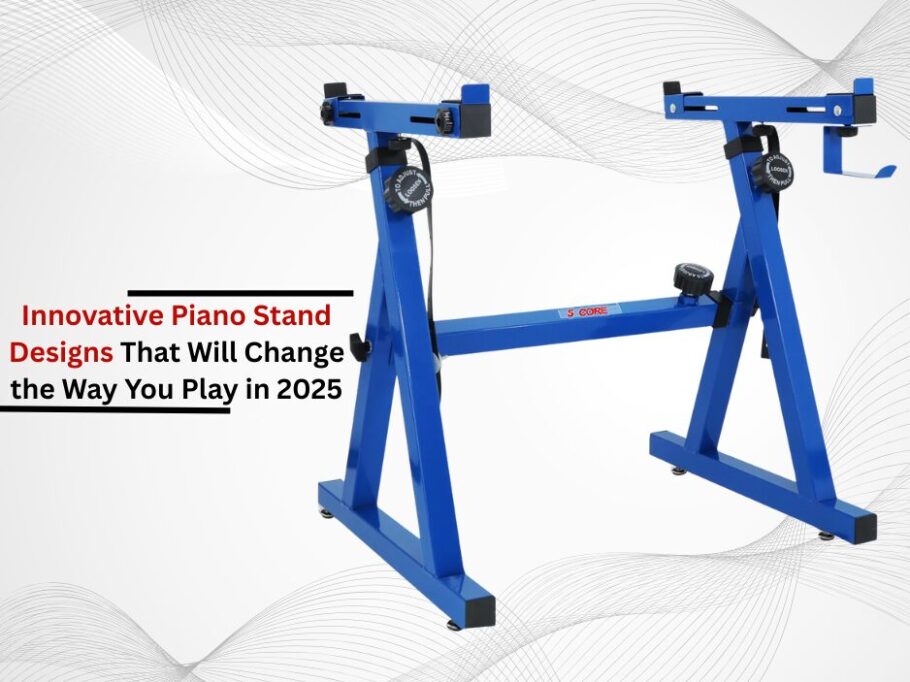
In the heart of amiable producers and their accompanying pianists lies unimaginable creativity and innovation regarding the multifunctional and often unnoticed peripherals of their art – the piano stands. In bulky, one-size-fits-all frames, supporting limb mobility and their stability was difficult to achieve. Now, in 2025, stands are expected to innovate alongside the music they endure with the help of smart technology, new materials, ergonomic design, and better shape controls. This greatly improves stability and the performance level, coupled with a deep emotional connection to the instrument.
To dive deeper, read: How Piano Stands Enhance Your Playing Experience in 2025: A Complete Guide
Evolution of Piano Stands
Starting Drawbacks and Innovations:
Early times saw people burdened with traditional piano stands that not only caused inconveniences while putting the piano together but also lacked any sort of stability. Shifting the frame from one place to another was made optional. During the century 20, various types of wooden and steel fixed wooden height supporting frameworks came into “popularity”. These severely lacked any form of care, along with standardization. Humid factors and basing weight caused unmanageable struggles for many touring artists.
Shift in a modularity direction:
The introduction of digital keyboards in the 2000s changed public perception on the use of electronic pianos and created a demand for portable and adjustable stands. Over time, they were met with the addition of telescopic legs, foldable frameworks, and boltless assembly. While these changes have been significant, there is still far greater potential that contemporary engineering could strive for.
What to expect in 2025
Self-stabilizing:
Advancements in sensor technology allow stands to self-correct. Microprocessors within the frame can identify surfaces that are off-balance or movements that need to be countered to be balanced, so using a motor to offset balance needs to be used. This is extremely beneficial for outdoor performances where stages are rarely flat.
Sustainable Materials Breakthroughs:
Piano stands manufactured from mycelium composites or recycled carbon fiber mycelium are now leaders in ecological sustainability because of their skeletal strength that is comparable to steel. These materials are also remarkably strong against warping and corrosion along with biodegradability, which guarantees durability in extreme climates.
Enhancing Playability Through Engineering
Ergonomic Customization:
The Piano stands with memory presets and hydromechanically preset configuration arms for classical pianists and electronic producers, using biomechanical hydromechanics specific to users. Rotating tiers enable dancers to sit, stand, and toggle between stances, while rest-padded wrists alleviate strain during extended sessions.
Connected Integration Hubs:
Modern techniques transform stands into hybrids, double-serving as components of tech ecosystems. Plug-in ports supporting USB-C connections, wireless charging, and Bluetooth routers eliminate cabling for interfacing with DAW equipment or MIDI. In addition, built-in peripheral pedals and compartments for audio interfaces aim to anchor untidy creative spaces remotely cluttered.
Evolution of Classical Music Equipment: Stands and Their Features
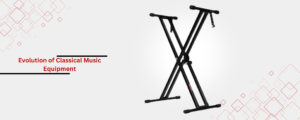
Collapsible and ultra-lightweight models:
The invention of portable self-supporting stands with a 100-pound weight limit is especially standing at a new level, boasting thanks to nano-engineering advances. Self-folding designs enable these stands to collapse into sturdy, compact forms fitting in carry-on luggage.
Multi-functional hybrid stands:
Sculpted to height-adjustable desks, they put versatility in the forefront with modular stands incorporating keyboards, synthesizers, and tablets. Customizable artistic frameworks designed and constructed for live looping teachers and performers can be assembled in seconds, making these stands perfect.
Conclusion
In 2025, the piano stand transitioned from a mere accessory towards a more advanced tool, courted by smart technology and traditional sustainability. Afterwork designs utilize precision ergonomics. The result empowers the musician to concentrate entirely on their craft—sharpened by 5 Core, Roland, K&M, RockJam, and Chromecast. Encouraging us that even basic tools like these can catalyze the boundaries of imagination. With the popularization of these technologies, the border intervening infrastructure and instruments will vanish, welcoming unprecedented joyous, unharnessed liberty of placeless musical creation.