
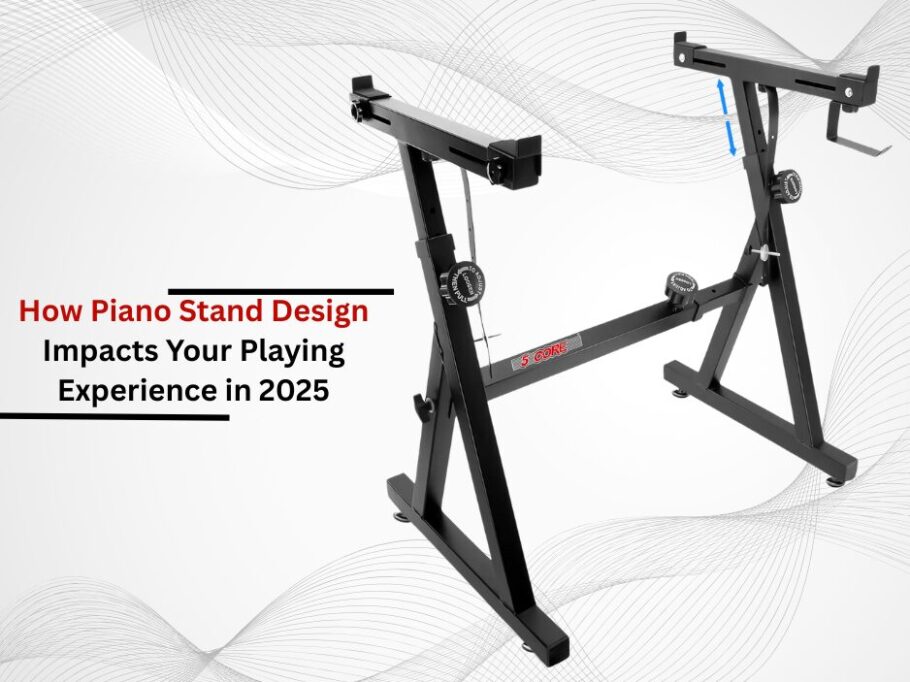
Piano stand design in 2025 goes beyond tradition into more ergonomic strides influencing comfort, mobility, and performance of the musician in all aspects. As today’s digital and acoustic instruments advance, so do their supporting structures, which incorporate smart technologies, ergonomics, and sustainable materials. Today, we will explore the many ways innovative technologies such as eco-friendly composites and AI modifications are restructuring even how musicians interface with their instruments. By focusing on stabilizing adaptable modern, health-conscious designs, ergonomically tailored stands are redefining the limits of play and artistic expression.
To know more, Read: Top 5 Keyboard Stands for 2025: The Best Choices for Musicians
Performance shaped by ergonomic innovation
Modern stands enhance comfort, biomechanics, and precision by reducing physical strain fostered by prolonged seating. Strikes of the core have responsive pads sensitive to pressure. AI now controls the height and tilt of devices based on posture and playing style with advanced AI. Musicians are now enabled to strive on precision, technique, and expression instead of focus diverted to fatigue.
Acoustic and Material Science

Stands serve a dual purpose and range from instruments of music to tools of environment. Materials that ineffectively boost sound quality and stability are dominated by modern lightweight vibration dampening composites that reduce resonance factors, preserving tipper tonal clarity. Sturdy bamboo hybrids and recycled polymers serve great to withstand environmentally friendly footprint responsibilities.
Tilt and Height Adaptive Systems:
Today’s instruments incorporate stands with motorized actuators for real-time height and angle adjustment. Sensors that detect shifts in body posture or playing dynamics automatically readjust the stand for optimal ergonomic positioning. It greatly helps hybrid performers who oscillate between seated classical pieces and stand during pulsating electronic sets. Where adaptability is needed without manual changes, hybrid performers truly benefit.
Control of Vibration and Resonance:
Excess keystroke vibrations are dampened with advanced materials for smoother control, such as silicone microspheres mixed in with carbon fiber. The outcome enables most unwanted resonance to be minimized in acoustic pianos and lowered signal interference in digital setups. The overall outcome results in cleaner sound output and a decrease in physical feedback, enhancing recording quality with incredible tactile response.
Smart Integration of Materials:
Serving thermochromic coatings that show indicative changes to potential alterations to tuning and self-healing polymers that repair surface scratches alone stretches the materials lifespan while providing real-time feedback.
Technological Synergy in Modern Stands

Intelligent makeshift engineering invented disorder-maintaining interfaces and focused. AI put into systems for stand monitors. The entire weight supported along with the merit of where legs rest provides sensors adjusting some worrying jolting the surface ensures performance focus without incidental swaying from vigorous inputs.
AI-Driven Stability Algorithms:
Stand-up modern integration allows AI algorithms for stability that allow fractional alterations to be made to encourage instrument balance when using to enable stillness throughout vigorous movement performance. Tailored machine-learned corrections help adjust overly fine to broad strokes over time in relation to individual playing style. Such systems are invaluable for anyone who performs live dealing with the everchanging conditions everywhere on stage.
Wireless Connectivity and Power Solutions:
Stand designs now combine wireless charging pads and USB-C hubs to declutter cables in home studios. Bluetooth models sync with DAWs or lighting systems for centralized control, and solar reactive surfaces on outdoor stands capture energy to sustain these systems, which enhances sustainability.
Health-Centric Design for Longevity

Posture-Corrective Feedback:
Armrest and body contact posture deviations are analyzed using pressure sensors and relayed to companion apps as alerts. Some stands provide supportive tilt adjustments for the lower back to encourage proper spinal alignment and decrease long-term injury risks. These features are especially praised by therapeutic musicians and educators.
Modularity for Shared Spaces:
Multipurpose areas are served by collapsible stands with tool-free assembly. Wall-mounted variants free floor space entirely, while tiered modularity provides quick reconfiguration for collaborative sessions. Such designs ensure the adaptation of the stand is made to the musician’s lifestyle and not the other way around.
Conclusion
Piano stand design will become an unnoticeable but essential component of a musician’s expression in the year 2025. With accurate ergonomics, creative materials, and technological integration, these designs enhance the quality of performance and comfort at the same time. Companies like 5 Core, Roland, K&M, and On Stage demonstrate this advancement, showing that even the most basic and straightforward aids have the potential to galvanize creativity. Stands will still be core to the dialogue between the musician and the instrument.